New Experience Strategies for the Design Museum of Chicago
New Experience Strategies for the Design Museum of Chicago
New Experience Strategies for the Design Museum of Chicago
Using service design to create meaningful moments across DMoC’s visitor journey, turning first-time discovery into lasting community relationships.
Using service design to create meaningful moments across DMoC’s visitor journey, turning first-time discovery into lasting community relationships.
Using service design to create meaningful moments across DMoC’s visitor journey, turning first-time discovery into lasting community relationships.
MY ROLE
MY ROLE
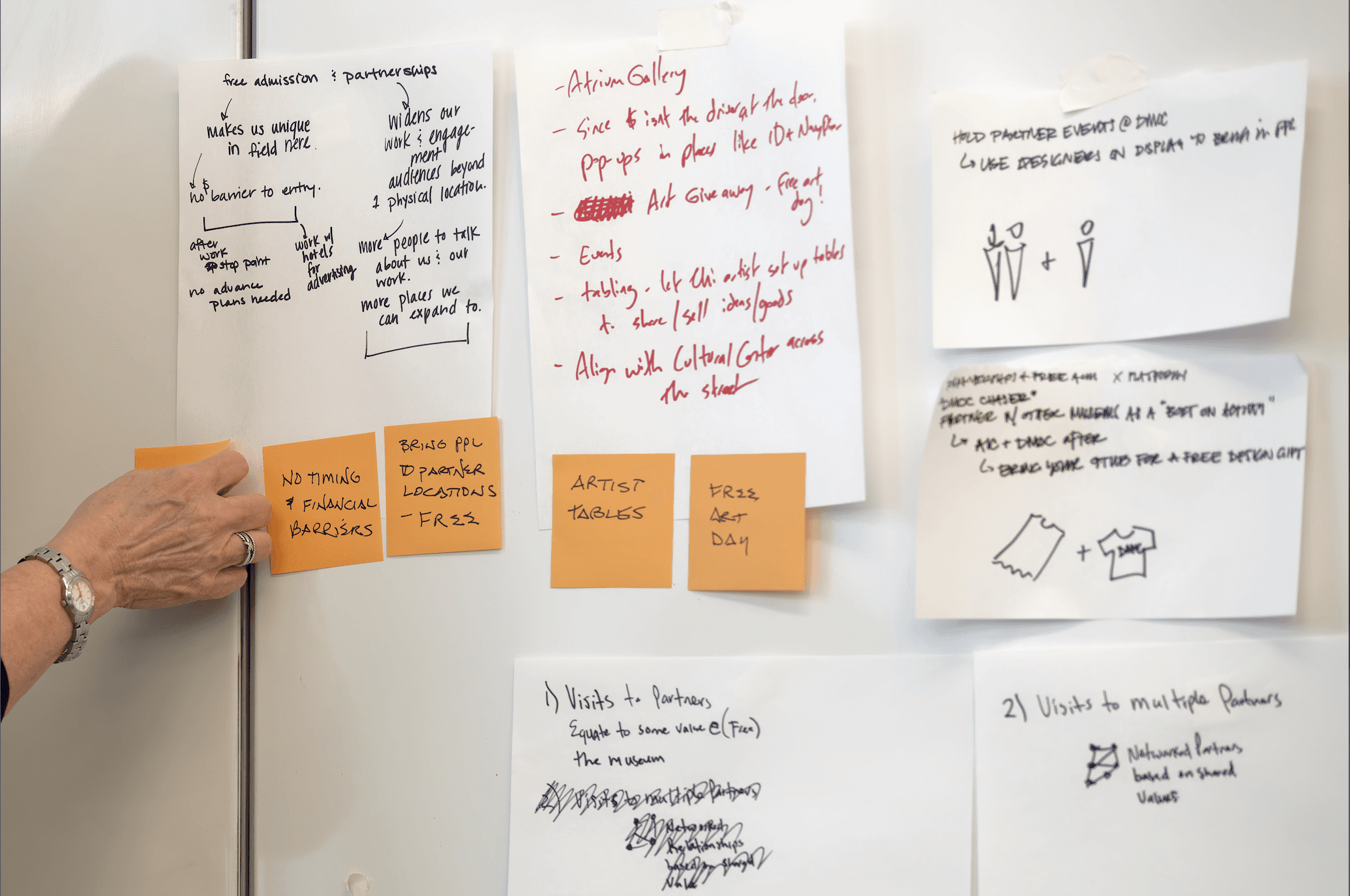
As a design strategist on this project, I was responsible for discovery research, framing insights, facilitating co-creation workshops, and helping shape the service ecosystem.
As a design strategist on this project, I was responsible for discovery research, framing insights, facilitating co-creation workshops, and helping shape the service ecosystem.
THE TEAM
THE TEAM
Sheethal Jacob
Tanvi Waghray
Sanjana Kumar
Preksha Gupta
Sheethal Jacob
Tanvi Waghray
Sanjana Kumar
Preksha Gupta
SKILLS
SKILLS
Design Strategy
Service Design
Conceptualization
Workshop Facilitation
Design Strategy
Service Design
Conceptualization
Workshop Facilitation
TIMELINE
TIMELINE
Feb 2025 - May 2025
13 Weeks
Feb 2025 - May 2025
13 Weeks
MY ROLE
As a design strategist on this project, I was responsible for discovery research, framing insights, facilitating co-creation workshops, and helping shape the service ecosystem.
THE TEAM
UX Designer (me), UX Designer, Staff UX Designer
SKILLS
UX Design, Conceptualization, Design Strategy
TIMELINE
July 2025 - Aug 2025, 4 Weeks
Project Overview
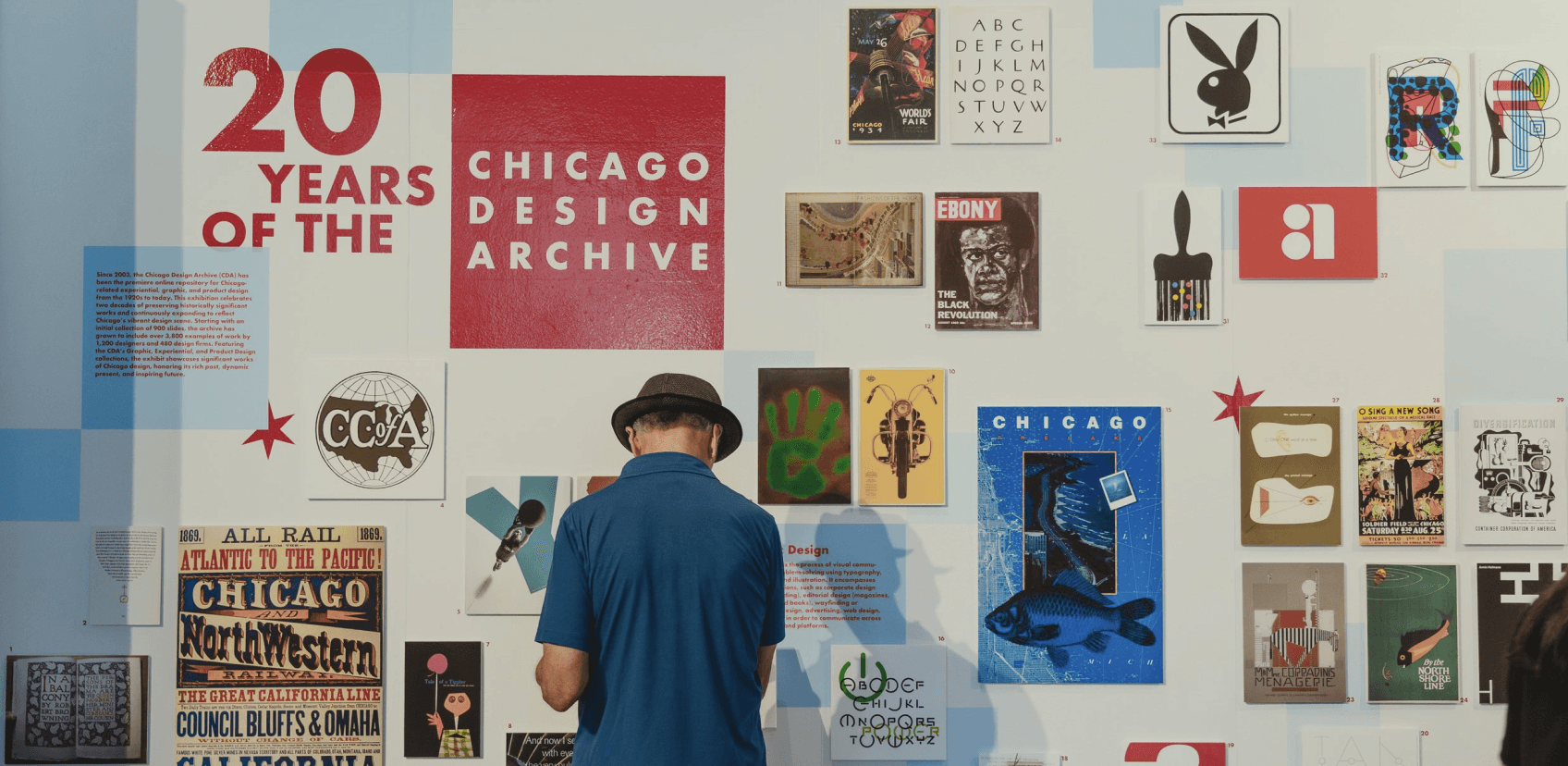
The Design Museum of Chicago is a design-focused, non-profit organization located in downtown Chicago. Despite hundreds of monthly walk-in visitors, it lacked a structured way to sustain engagement beyond the first visit. The challenge was to reimagine how the museum could convert first-time discovery into deeper relationships, stronger membership value, and more resilient revenue pathways.
The Design Museum of Chicago is a design-focused, non-profit organization located in downtown Chicago. Despite hundreds of monthly walk-in visitors, it lacked a structured way to sustain engagement beyond the first visit. The challenge was to reimagine how the museum could convert first-time discovery into deeper relationships, stronger membership value, and more resilient revenue pathways.
Project Outcome
This project resulted in a reusable framework to guide future visitor journeys and strategic decision-making at DMoC. Co-creation workshops helped align stakeholder priorities and audience needs. This led to a future-state ecosystem of 6 service blueprints tied to the museum’s core growth objectives.
This project resulted in a reusable framework to guide future visitor journeys and strategic decision-making at DMoC. Co-creation workshops helped align stakeholder priorities and audience needs. This led to a future-state ecosystem of 6 service blueprints tied to the museum’s core growth objectives.
Project Overview
The Design Museum of Chicago is a design-focused, non-profit organization located in downtown Chicago. Despite hundreds of monthly walk-in visitors, it lacked a structured way to sustain engagement beyond the first visit. The challenge was to reimagine how the museum could convert first-time discovery into deeper relationships, stronger membership value, and more resilient revenue pathways.
Project Outcome
This project resulted in a reusable framework to guide future visitor journeys and strategic decision-making at DMoC. Co-creation workshops helped align stakeholder priorities and audience needs. This led to a future-state ecosystem of 6 service blueprints tied to the museum’s core growth objectives.
Museum's key business goals
Museum's key business goals
01
01
01
Increase Public
Awareness
Increase Public
Awareness
Increase Public Awareness
Grow reach across digital and physical touchpoints.
Grow reach across digital and physical touchpoints.
Grow reach across digital and physical touchpoints.
02
02
02
Boost and Sustain
Memberships
Boost and Sustain
Memberships
Boost and Sustain Memberships
Increase member value through exclusive community offerings.
Increase member value through exclusive community offerings.
Increase member value through exclusive community offerings.
03
03
03
Strengthen Revenue
Pathways
Strengthen Revenue
Pathways
Strengthen Revenue Pathways
Convert engagement into recurring revenue streams.
Convert engagement into recurring revenue streams.
Convert engagement into recurring revenue streams.
Project Research Rigor
Grounded in a mix of primary and secondary research, the project combined on-the-ground observations with broader ecosystem analysis to build a holistic understanding of DMoC’s audience, operations, and opportunities.
Grounded in a mix of primary and secondary research, the project combined on-the-ground observations with broader ecosystem analysis to build a holistic understanding of DMoC’s audience, operations, and opportunities.
PRIMARY RESEARCH
PRIMARY RESEARCH
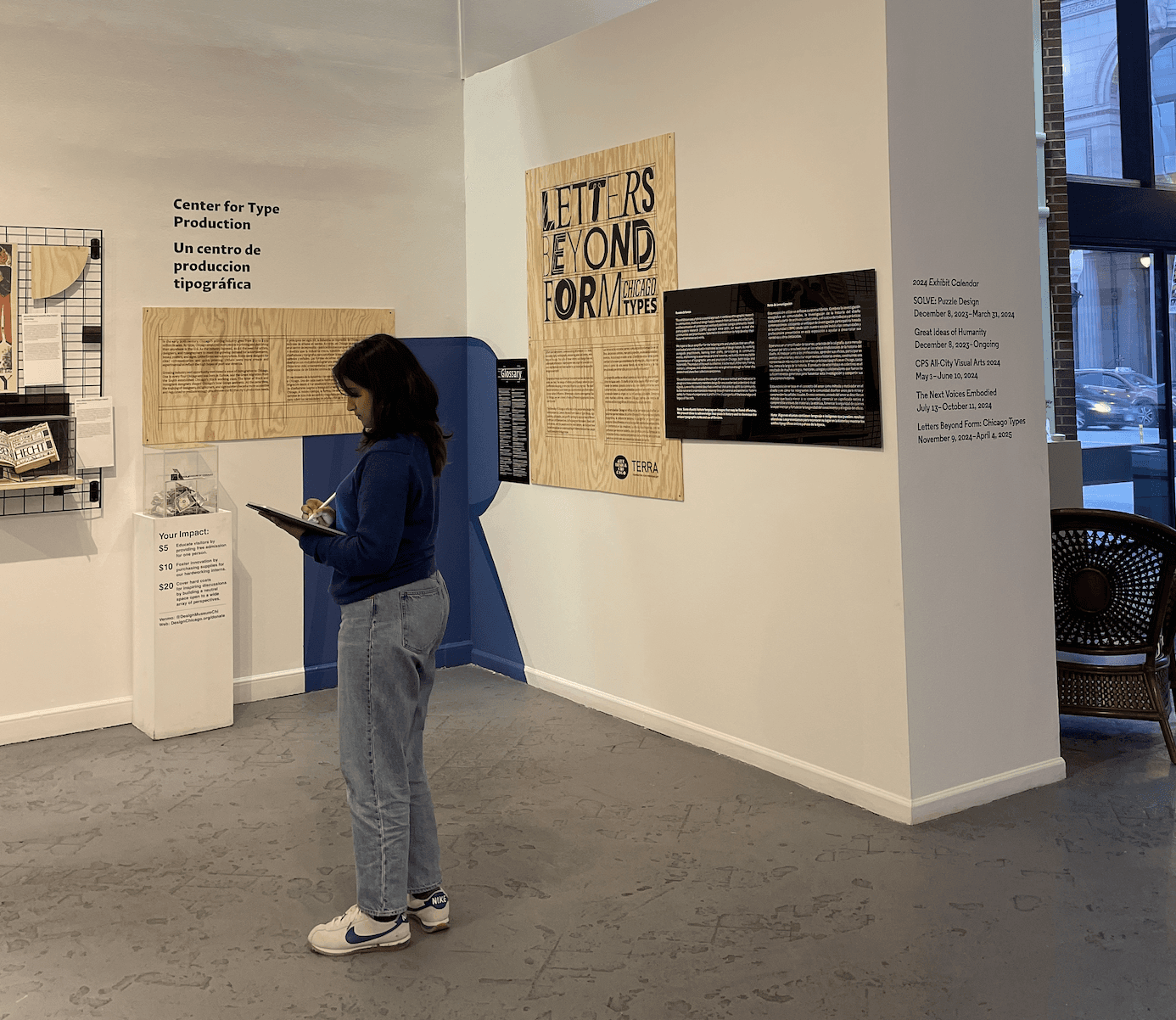
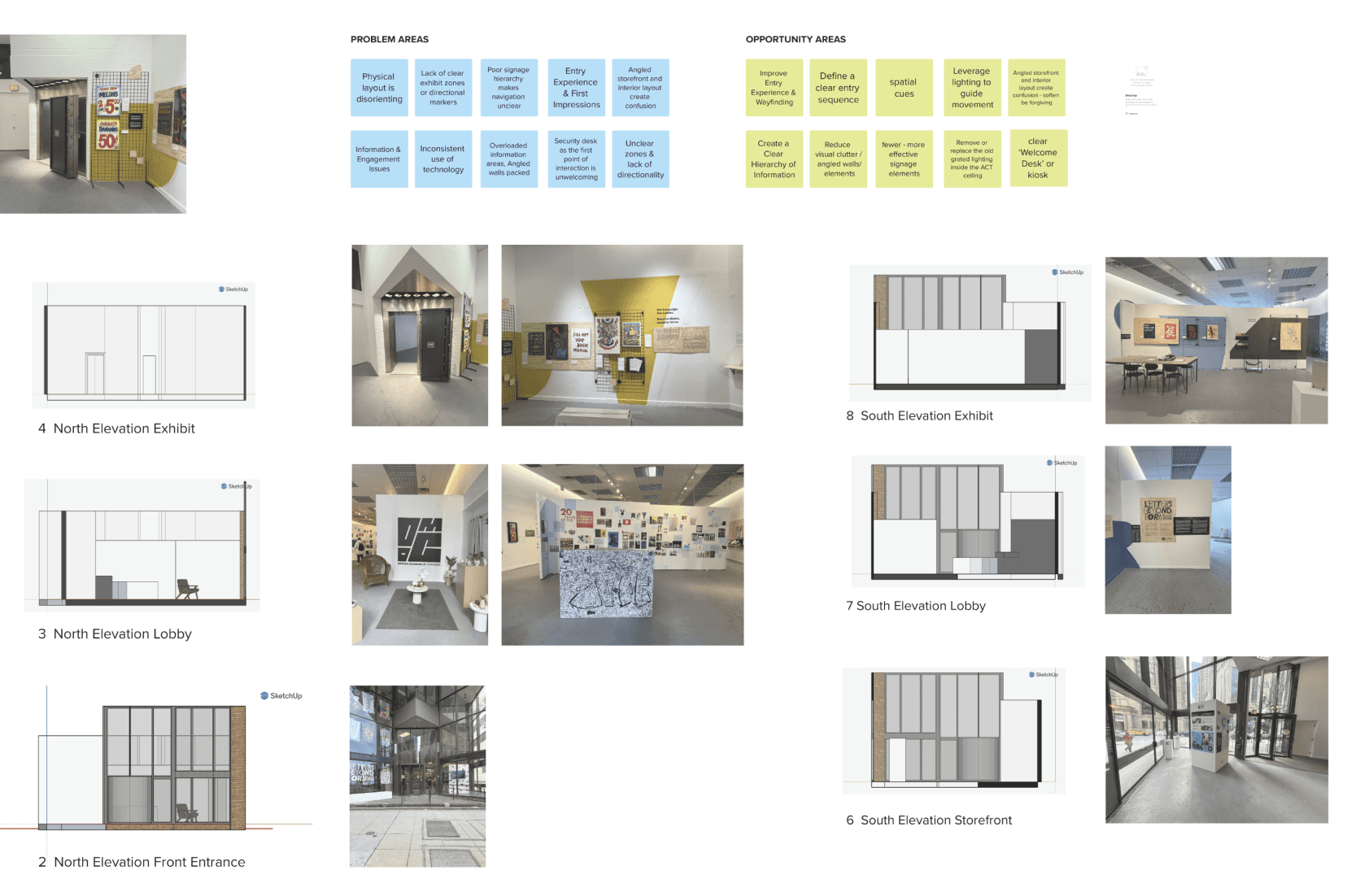
Through stakeholder interviews, space analysis, and observational studies, we mapped how people experience DMoC.
Through stakeholder interviews, space analysis, and observational studies, we mapped how people experience DMoC.
SECONDARY RESEARCH
SECONDARY RESEARCH
Through benchmarking, media scans, and reports, we identified how DMoC currently measures success against the 3 goals.
Through benchmarking, media scans, and reports, we identified how DMoC currently measures success against the 3 goals.
Research findings led to the key driving insights under each of the business goals.
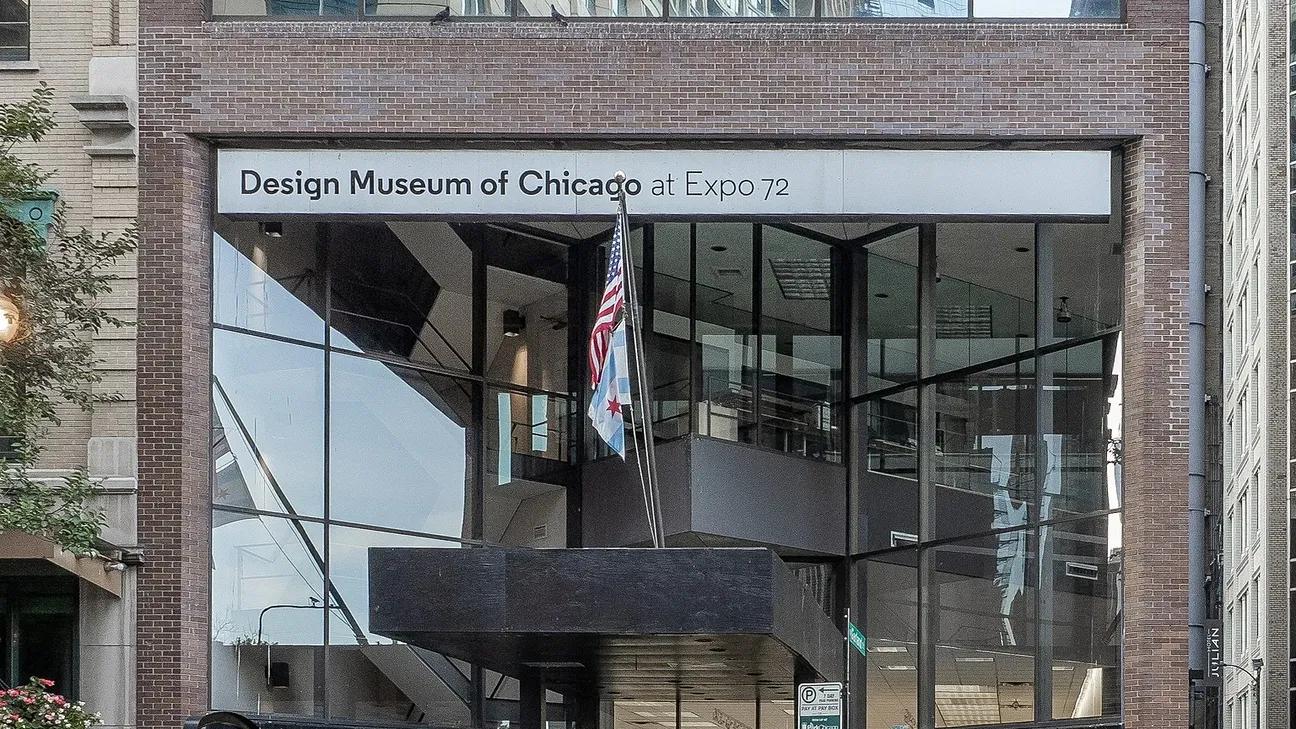
INSIGHT #1 - AWARENESS
Visitor engagement is low beyond the
first visit.
Visitor engagement is low beyond the first visit.
The absence of a post-visit strategy, limited retention efforts, and inconsistencies in marketing and branding significantly reduce opportunities for engagement.
The absence of a post-visit strategy, limited retention efforts, and inconsistencies in marketing and branding significantly reduce opportunities for engagement.
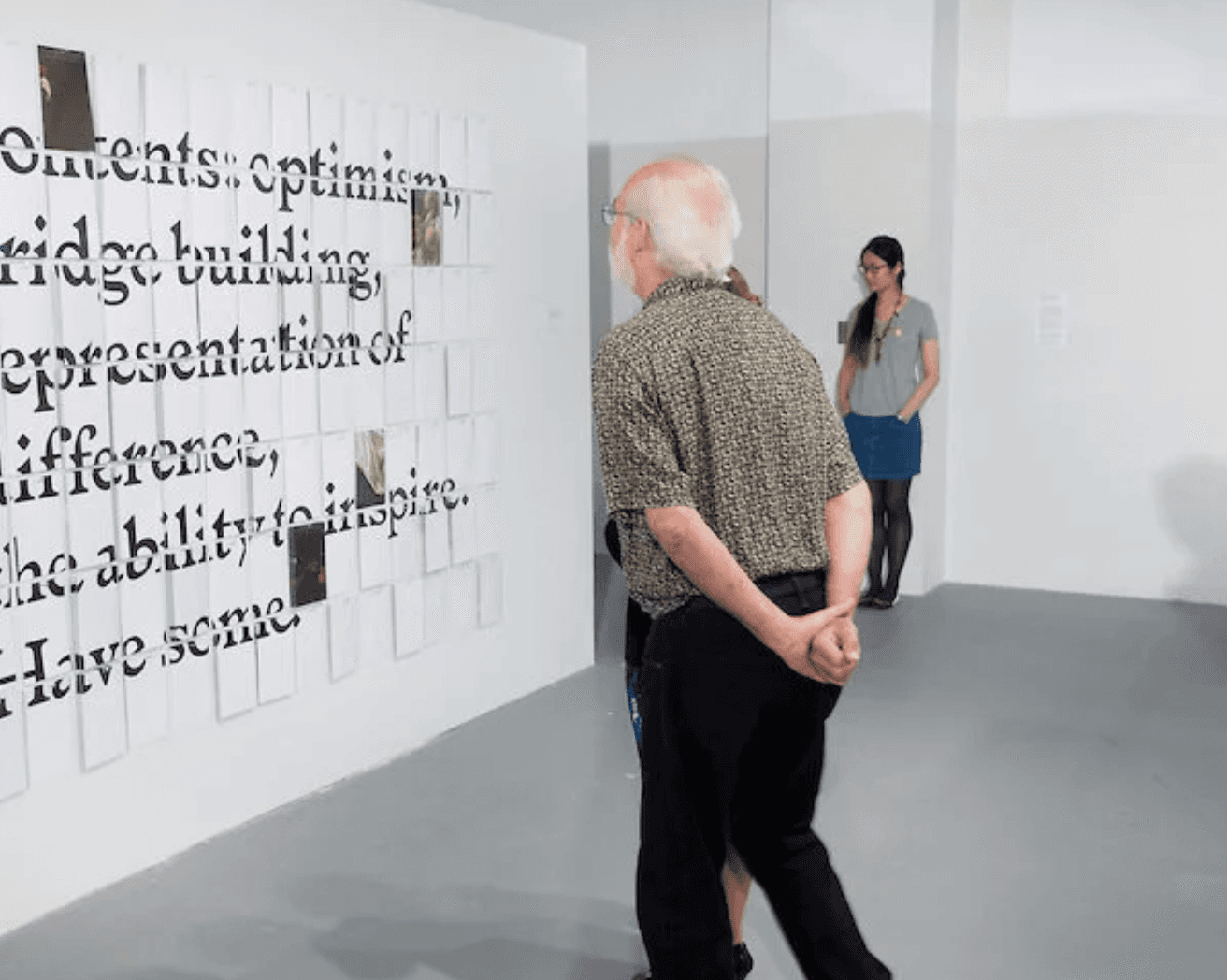
INSIGHT #2 - MEMBERSHIP
Membership is positioned as support for the museum and lacks perceived value.
Membership is positioned as support for the museum and lacks perceived value.
Visitors enjoy the exhibits, but do not see clear value in becoming members. Membership lacks differentiated benefits that incentivize ongoing participation.
Visitors enjoy the exhibits, but do not see clear value in becoming members. Membership lacks differentiated benefits that incentivize ongoing participation.
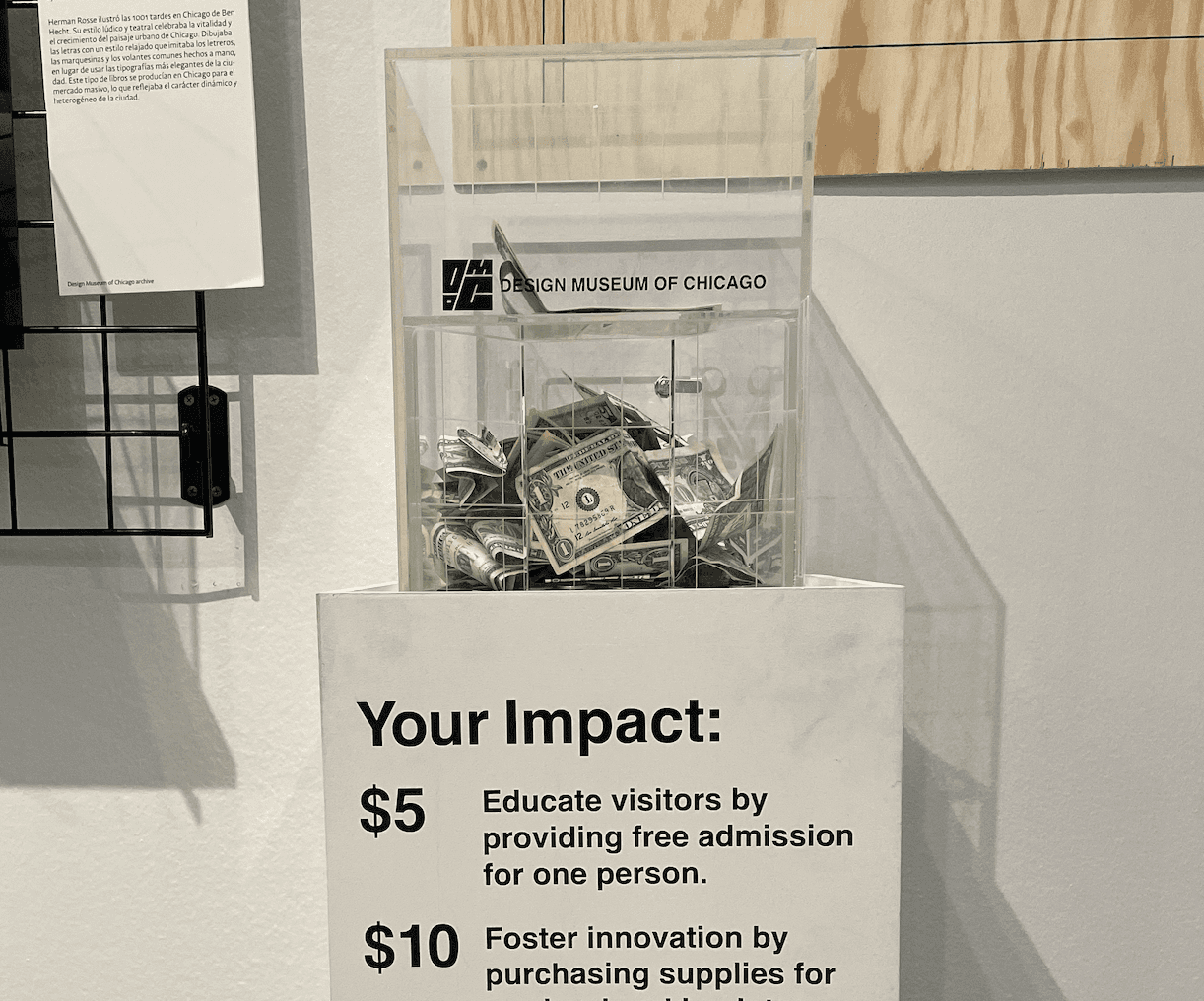
INSIGHT #3 - REVENUE
The museum operates on isolated revenue streams rather than a connected system.
The museum operates on isolated revenue streams rather than a connected system.
The museum relies on a mix of grants, donations, and event-based income, but these streams function independently, without scalable ways to drive revenue.
The museum relies on a mix of grants, donations, and event-based income, but these streams function independently, without scalable ways to drive revenue.
Project Research Rigor
Grounded in a mix of primary and secondary research, the project combined on-the-ground observations with broader ecosystem analysis to build a holistic understanding of DMoC’s audience, operations, and opportunities.
PRIMARY RESEARCH
Through stakeholder interviews, space analysis, and observational studies, we mapped how people experience DMoC.
SECONDARY RESEARCH
Through benchmarking, media scans, and reports, we identified how DMoC currently measures success against the 3 goals.
Research findings led to the key driving insights under each of the business goals.
INSIGHT #1 - AWARENESS
Visitor engagement is low beyond the first visit.
The absence of a post-visit strategy, limited retention efforts, and inconsistencies in marketing and branding significantly reduce opportunities for engagement.
INSIGHT #2 - MEMBERSHIP
Membership is positioned as support for the museum and lacks perceived value.
Visitors enjoy the exhibits, but do not see clear value in becoming members. Membership lacks differentiated benefits that incentivize ongoing participation.
INSIGHT #3 - REVENUE
The museum operates on isolated revenue streams rather than a connected system.
The museum relies on a mix of grants, donations, and event-based income, but these streams function independently, without scalable ways to drive revenue.
After research, we moved on to the ideation phase.
After research, we moved on to the ideation phase.
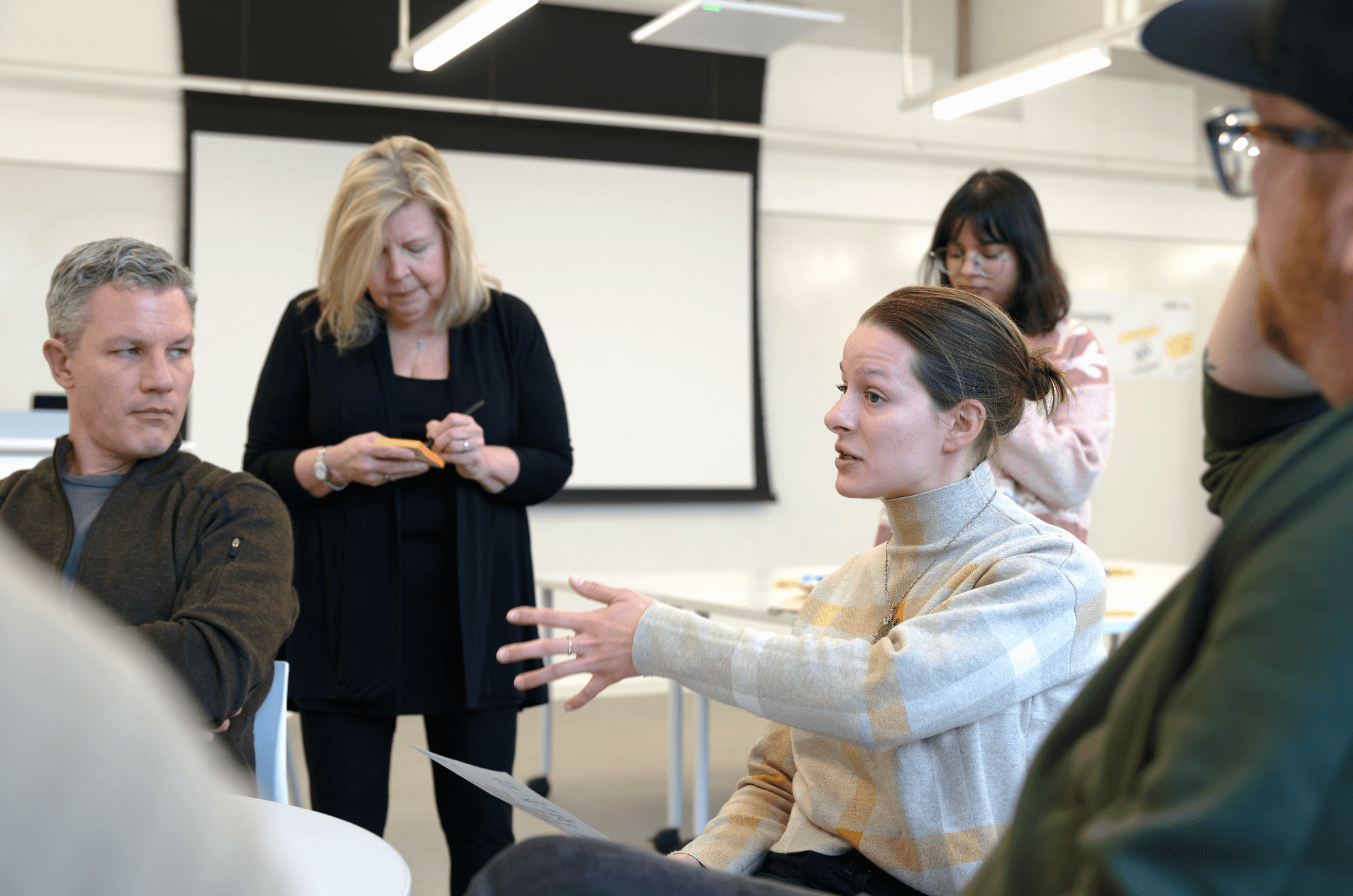
Co-creation workshops with the stakeholders
helped align perspectives and move ideas into action.
Co-creation workshops with the stakeholders
helped align perspectives and move ideas into action.
Generate ideas with stakeholders
Generate ideas with stakeholders
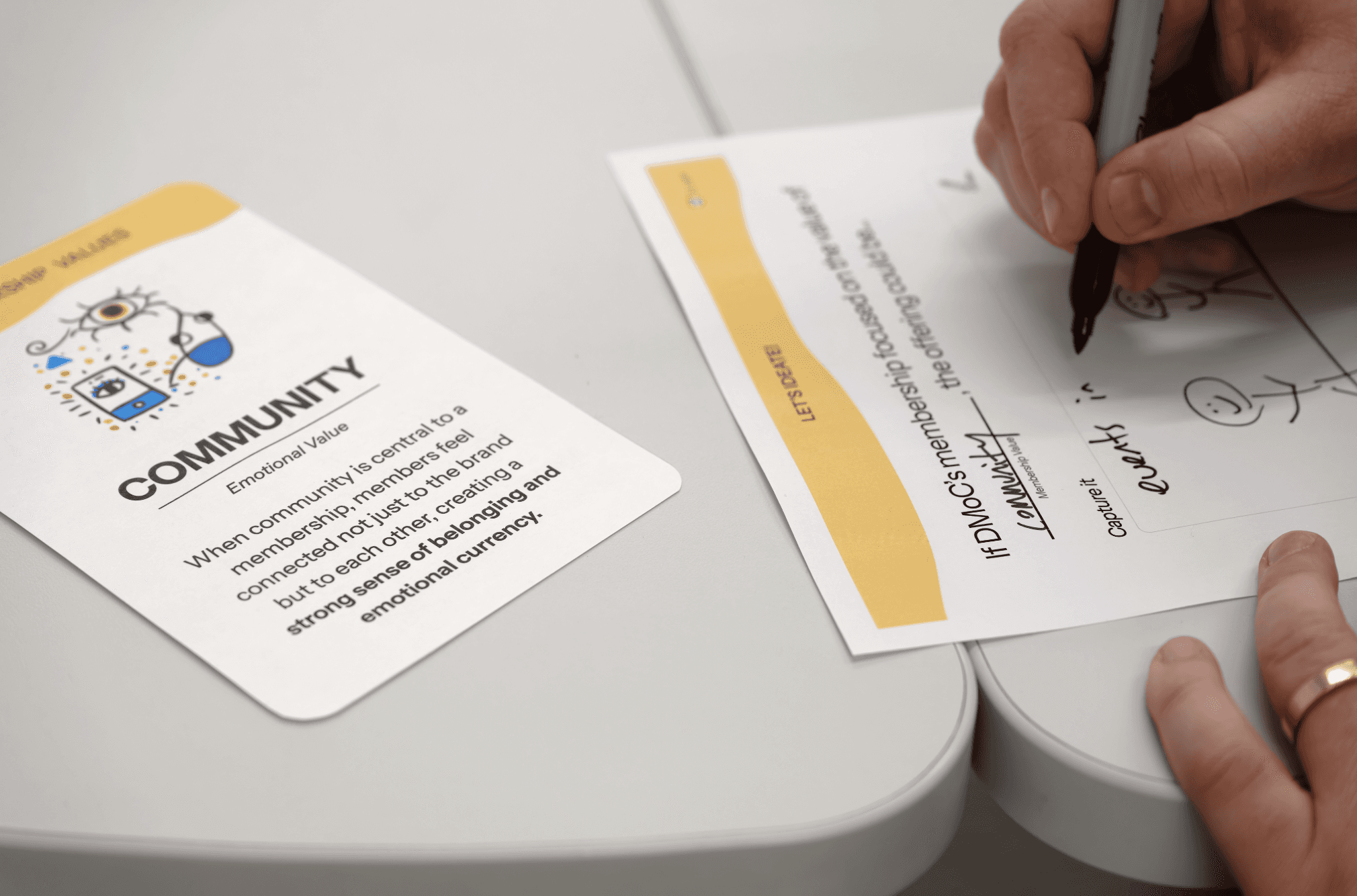
Prioritize high-impact concepts
Prioritize high-impact concepts
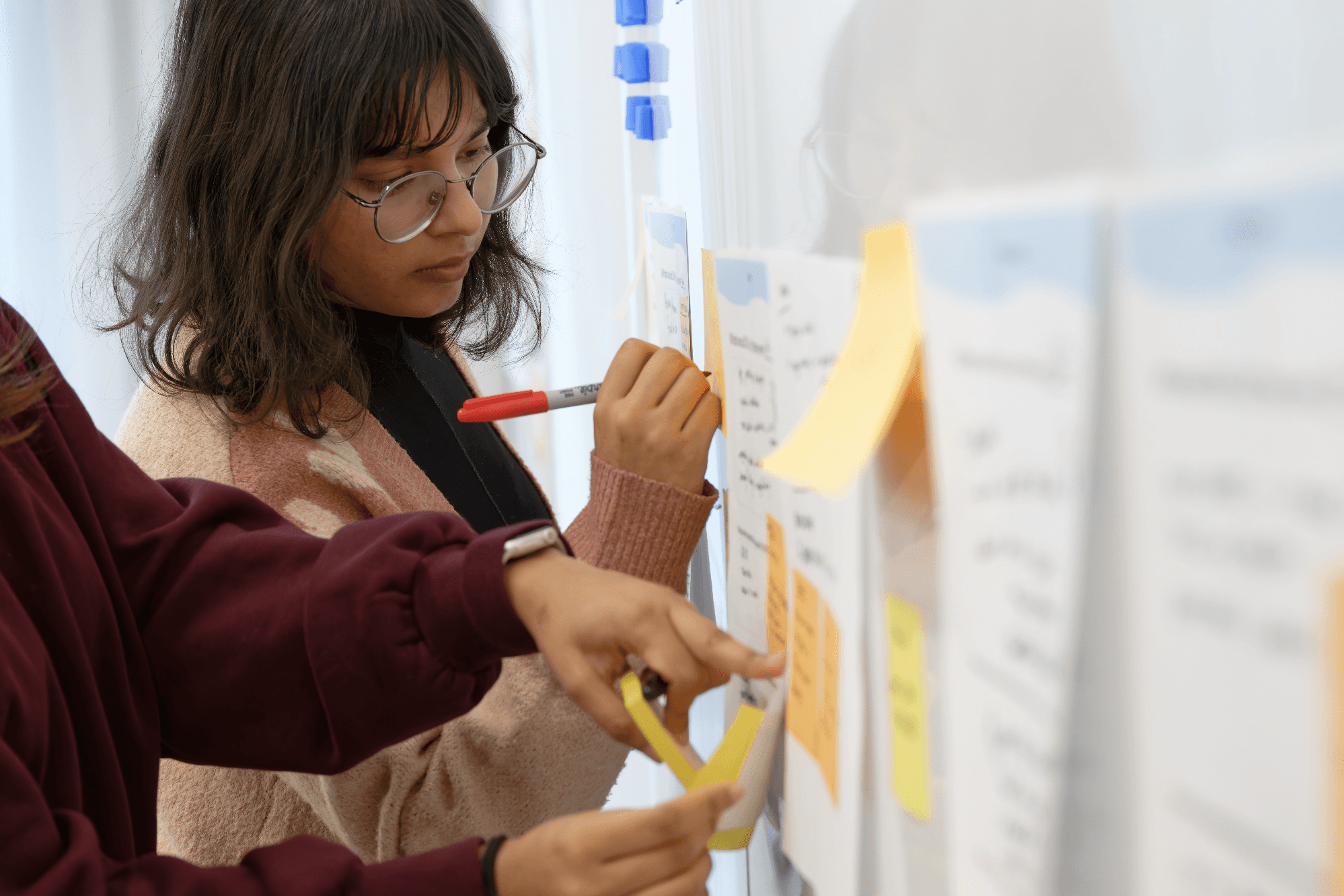
Accelerate decision making
Accelerate decision making
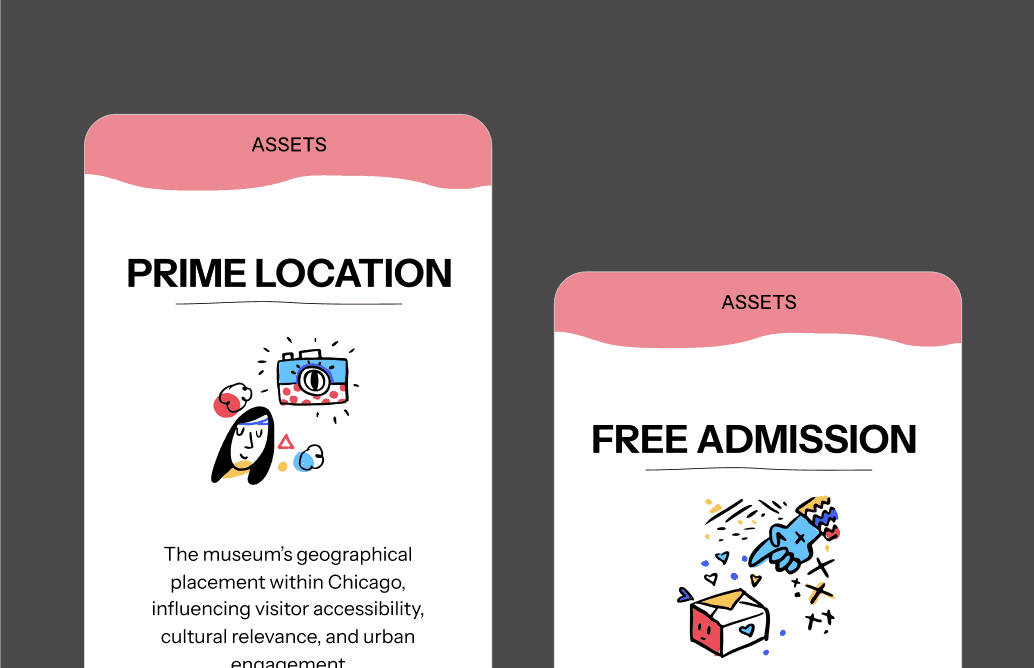
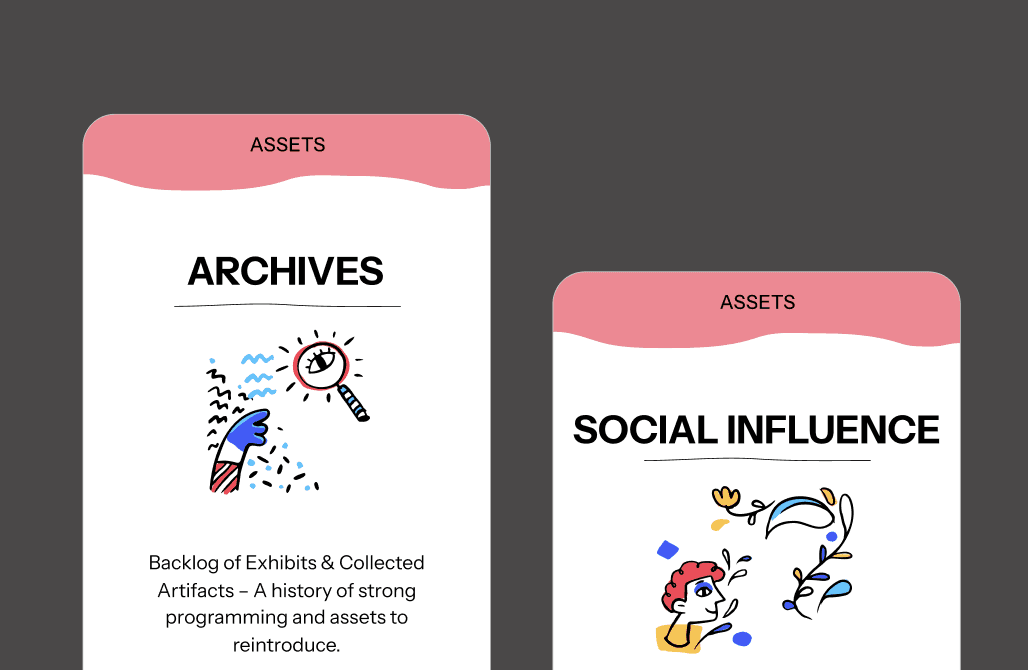
STRATEGY GOING INTO THE WORKSHOPS
STRATEGY GOING INTO THE WORKSHOPS
Existing assets and strengths of DMoC were evaluated, and the strongest ones were pulled out to be leveraged. These were centric to our activities during the ideation phase.
Existing assets and strengths of DMoC were evaluated, and the strongest ones were pulled out to be leveraged. These were centric to our activities during the ideation phase.
After research, we moved on to the ideation phase.
Co-creation workshops with the stakeholders
helped align perspectives and move ideas into action.
Generate ideas with stakeholders
Prioritize high-impact concepts
Accelerate decision making
STRATEGY GOING INTO THE WORKSHOPS
Existing assets and strengths of DMoC were evaluated, and the strongest ones were pulled out to be leveraged. These were centric to our activities during the ideation phase.
Conceptualization
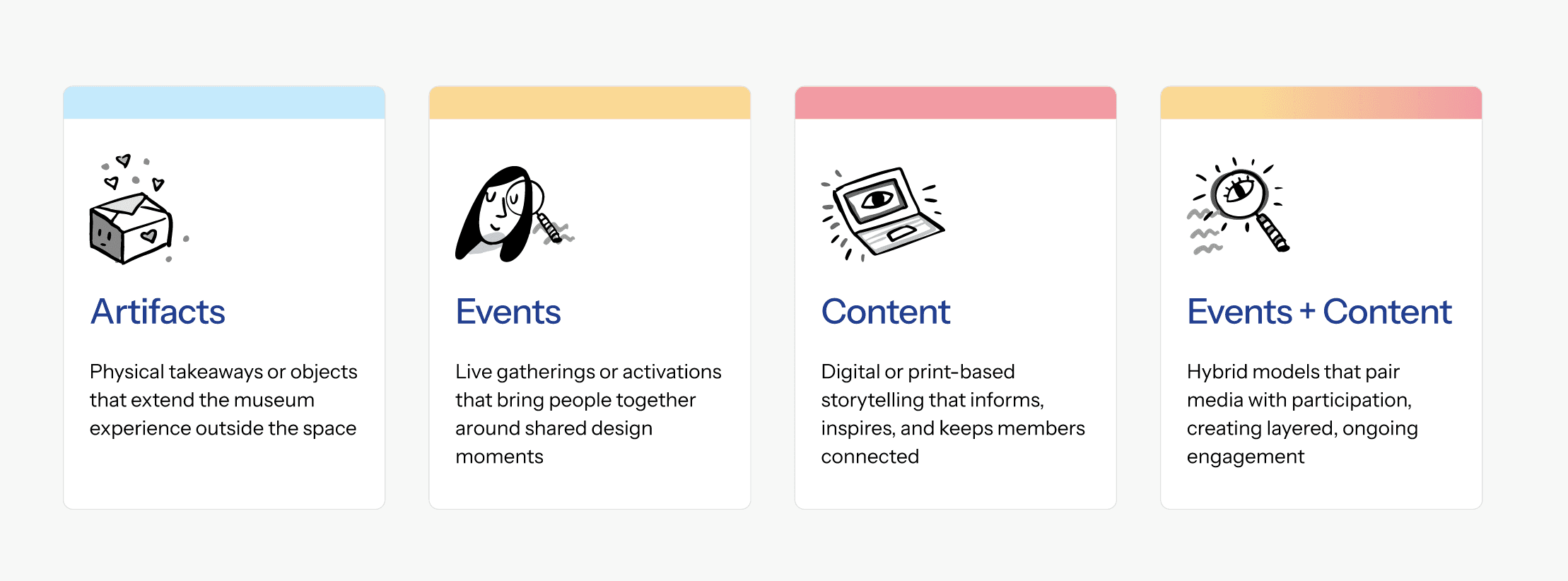
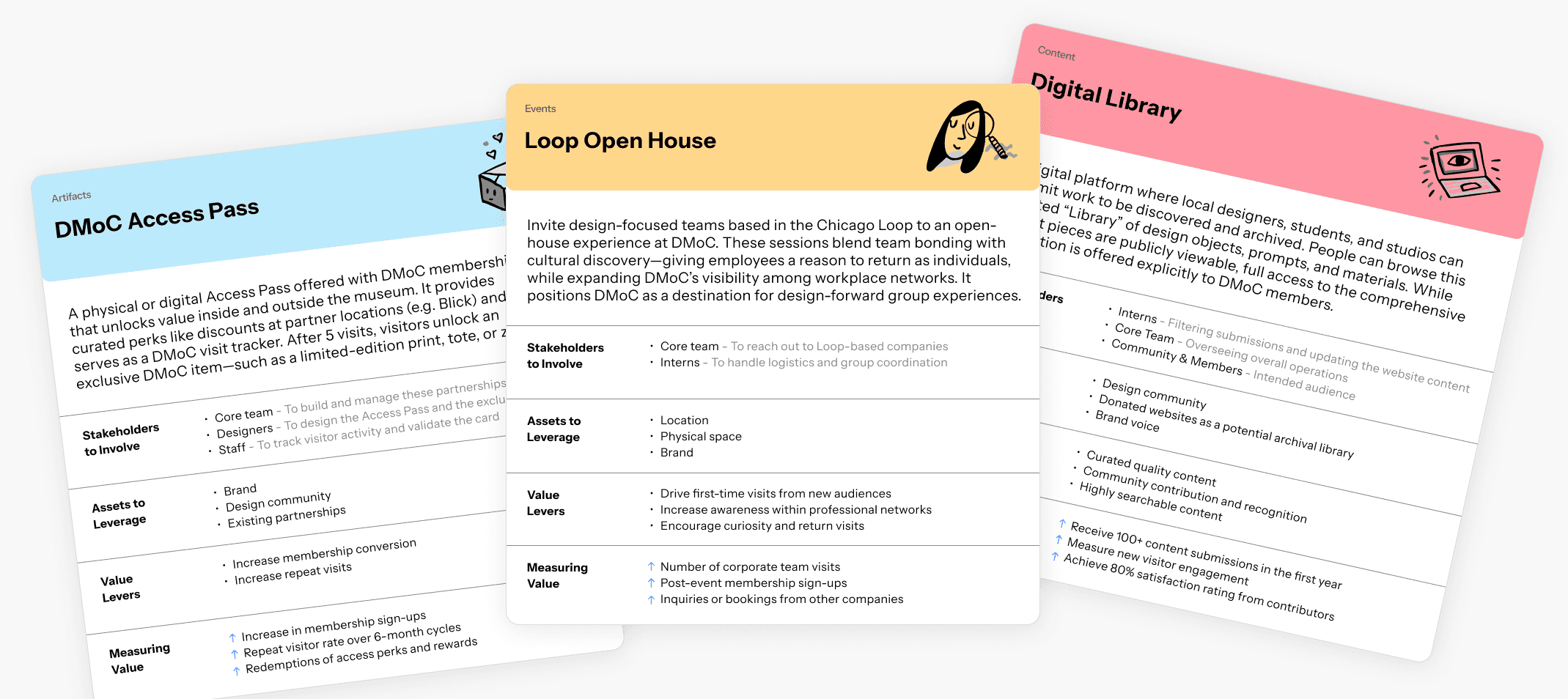
To make the ideas more actionable, we created 9 'Concept Cards'. The concepts were grouped by how they engage members and visitors, whether through physical objects, shared experiences, storytelling, or hybrid models.
To make the ideas more actionable, we created 9 'Concept Cards'. The concepts were grouped by how they engage members and visitors, whether through physical objects, shared experiences, storytelling, or hybrid models.
Future proofing the experience
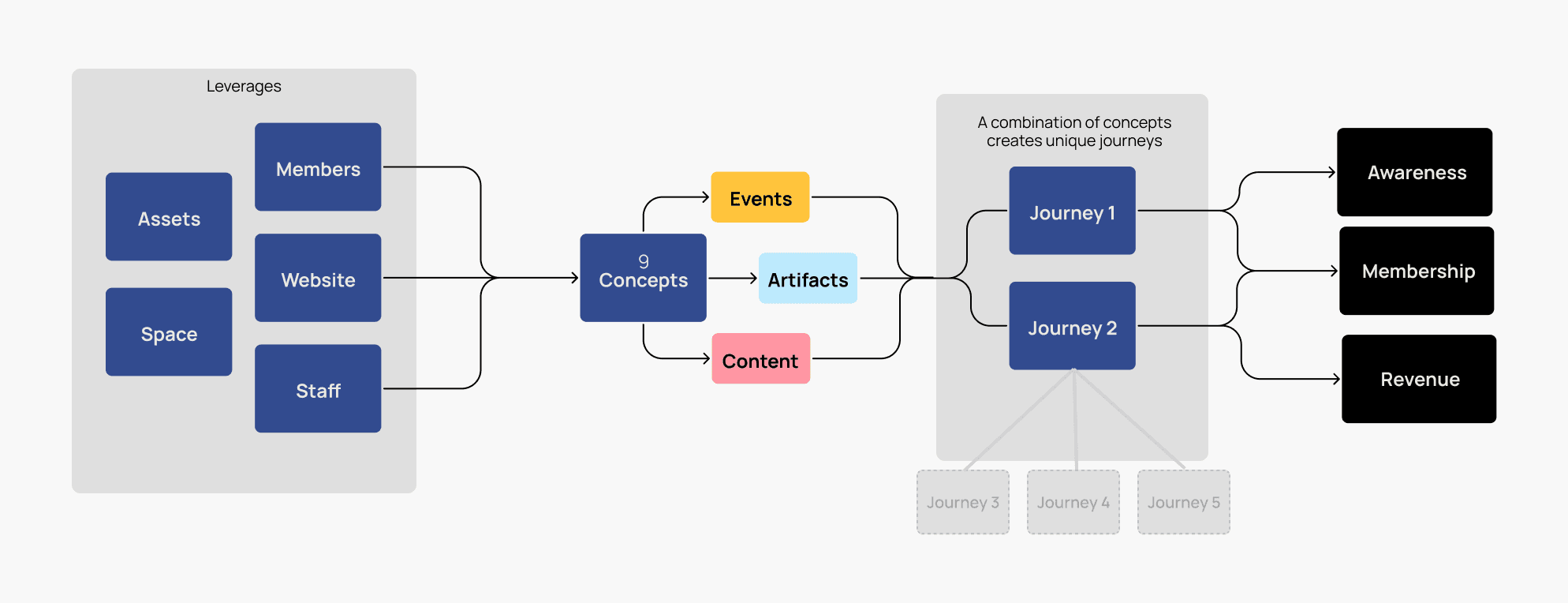
This framework enables DMoC to create new and timely user journeys by combining and recombining the 9 concepts. These journeys can be adapted over time to drive awareness, membership, and revenue goals.
This framework enables DMoC to create new and timely user journeys by combining and recombining the 9 concepts. These journeys can be adapted over time to drive awareness, membership, and revenue goals.
This led us to a set of prioritized experience blueprints
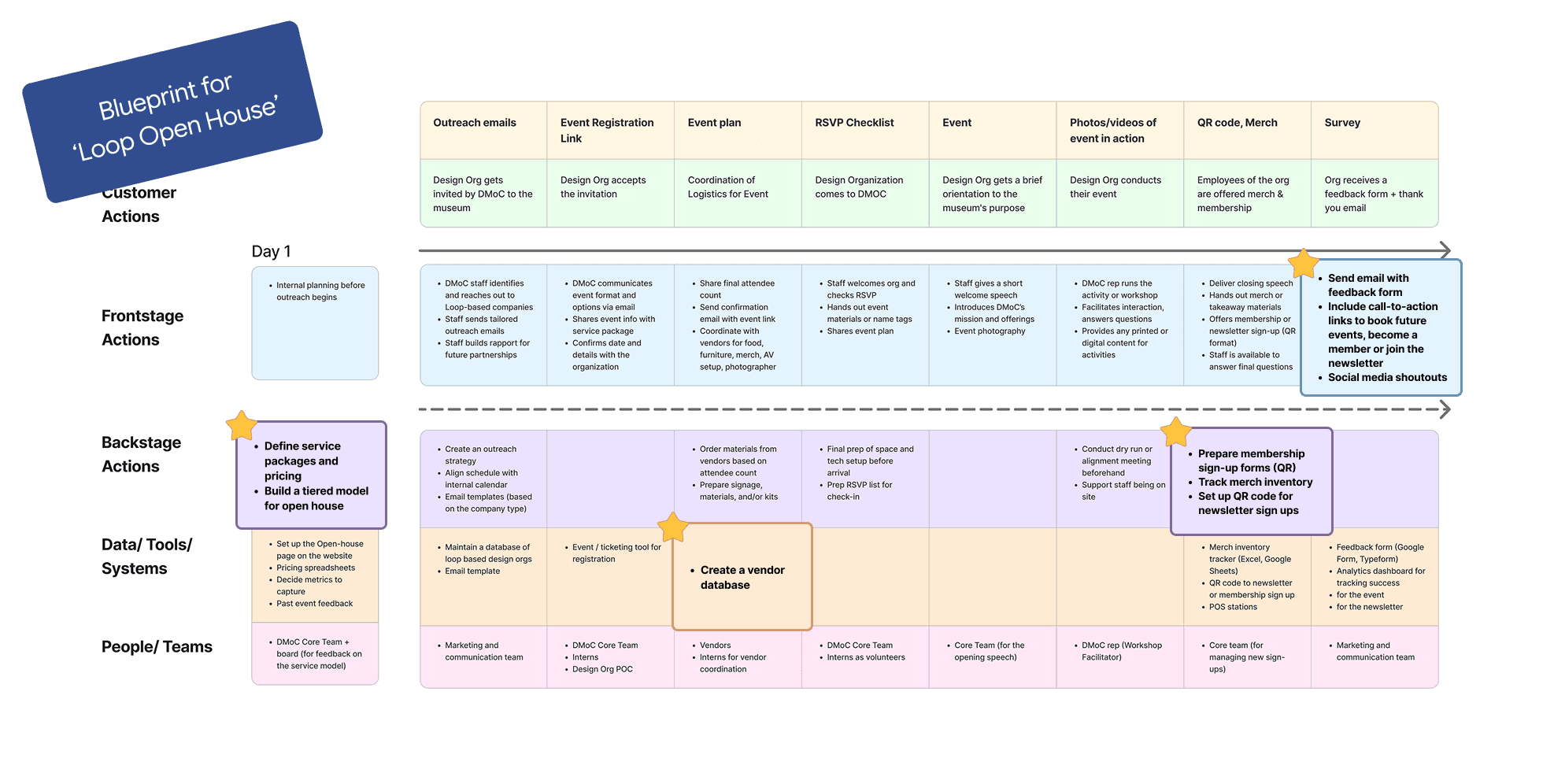
The journeys were translated into structured blueprints that define how each concept can be implemented end-to-end. Each blueprint was evaluated through an effort-versus-impact lens during a prioritization workshop with the client. Existing DMoC assets were mapped into these flows to identify reuse opportunities and reduce build complexity. Each blueprint defines how to measure success through clear, trackable metrics aligned to business outcomes.
The journeys were translated into structured blueprints that define how each concept can be implemented end-to-end. Each blueprint was evaluated through an effort-versus-impact lens during a prioritization workshop with the client. Existing DMoC assets were mapped into these flows to identify reuse opportunities and reduce build complexity. Each blueprint defines how to measure success through clear, trackable metrics aligned to business outcomes.
Conceptualization
To make the ideas more actionable, we created 9 'Concept Cards'. The concepts were grouped by how they engage members and visitors, whether through physical objects, shared experiences, storytelling, or hybrid models.
Future proofing the experience
This framework enables DMoC to create new and timely user journeys by combining and recombining the 9 concepts. These journeys can be adapted over time to drive awareness, membership, and revenue goals.
This led us to a set of prioritized experience blueprints
The journeys were translated into structured blueprints that define how each concept can be implemented end-to-end. Each blueprint was evaluated through an effort-versus-impact lens during a prioritization workshop with the client. Existing DMoC assets were mapped into these flows to identify reuse opportunities and reduce build complexity. Each blueprint defines how to measure success through clear, trackable metrics aligned to business outcomes.
To sum up,
TO SUM UP,
This collaboration enables DMoC to drive measurable business value post-implementation and track outcomes through defined metrics, while establishing a reusable framework for strategic decision-making.
This collaboration enables DMoC to drive measurable business value post-implementation and track outcomes through defined metrics, while establishing a reusable framework for strategic decision-making.
TO SUM UP,
This collaboration enables DMoC to drive measurable business value post-implementation and track outcomes through defined metrics, while establishing a reusable framework for strategic decision-making.
View Next Project
View Next Project


THE CHALLENGE
THE CHALLENGE
DMoC’s visitor engagement largely ended with the physical visit, making it difficult to build lasting audience relationships. The goal was to grow engagement beyond the visit and create sustainable value for both visitors and the museum.
DMoC’s visitor engagement largely ended with the physical visit, making it difficult to build lasting audience relationships. The goal was to grow engagement beyond the visit and create sustainable value for both visitors and the museum.
THE CHALLENGE
DMoC’s visitor engagement largely ended with the physical visit, making it difficult to build lasting audience relationships. The goal was to grow engagement beyond the visit and create sustainable value for both visitors and the museum.