My curiosity about grade inflation started from what I was hearing around me at school: "Grades don't really matter," "This class is an easy A." It made me pause. A couple of years ago, when I was in school in India, the conversation around grades was different. There was anticipation around them, weight. So is getting easy A's just a cultural thing? Is Asia's intense focus on grades a good thing? A bad thing? I didn't know. But I kept sitting with the question.
The more I sat with it, the less it felt like an isolated academic issue.
On the surface, grade inflation seems simple: students are getting higher grades than their work warrants. But underneath that is a deeper shift in how education itself is being framed, and this shift changes behavior across the entire ecosystem. Students, parents, professors, administrators. Everyone.
When education becomes as expensive as a luxury car, the relationship changes. You stop feeling like a student and start feeling like a customer. And what do customers want? They want value. If parents and students are dropping tens of thousands of dollars, they want a tangible receipt that says, "This investment is working." A transcript full of A's is that receipt. A document that can get you into a good college, a good job — proof that the money was worth it. This pressure forces institutions to align with parental expectations. And more often than not, the standards soften.
When we treat a grade like a product we've purchased, we lose the "intellectual discomfort" that actually leads to learning. The confusion, the revision, the trying again.
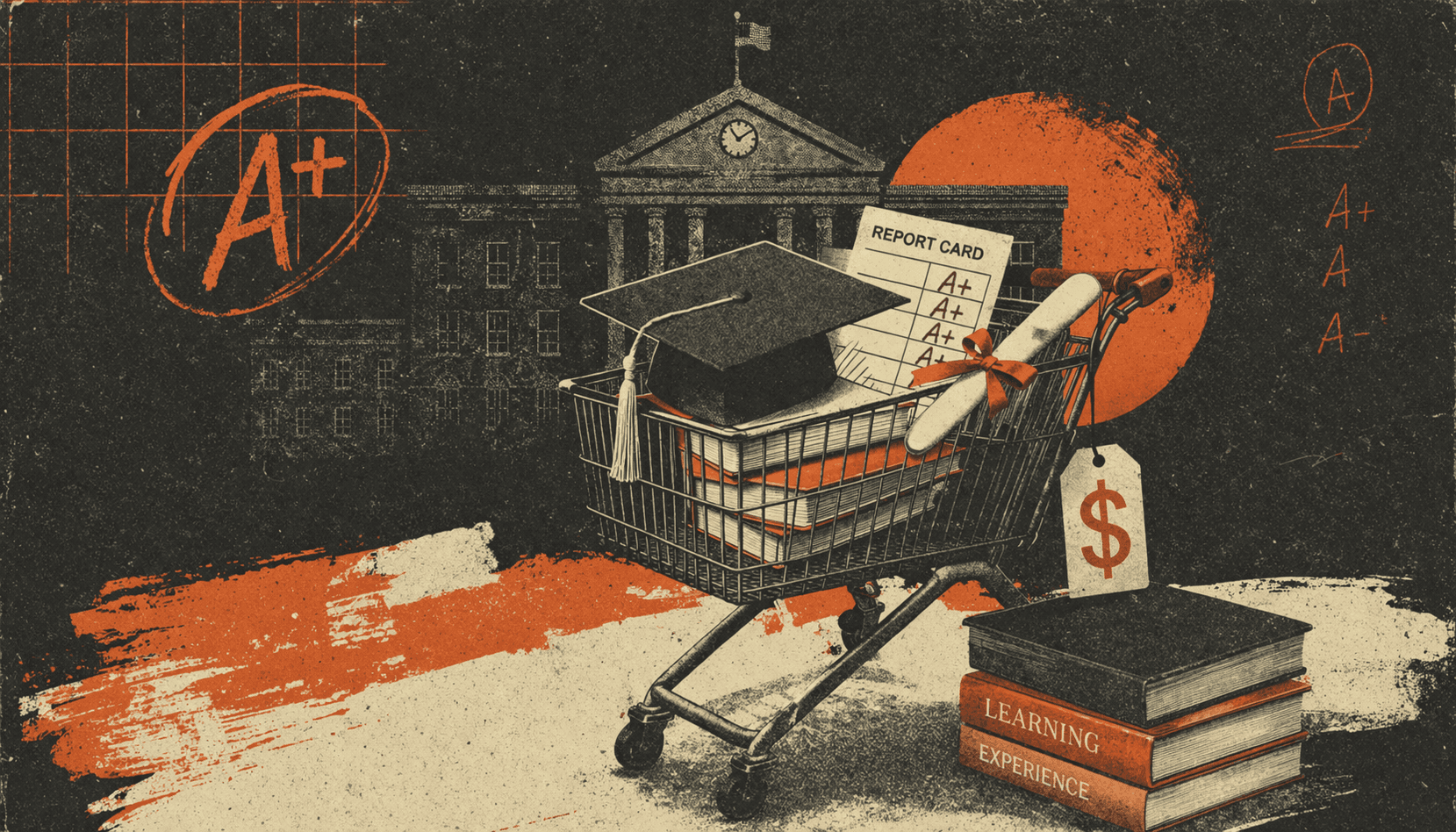
At selective private institutions, students often arrive with a deep sense of academic pride. Their admission, in their mind, warrants higher grades. So even relatively poor performance might get awarded higher marks, because the assumption is that the quality of work at a selective school is inherently superior to that of a less selective one. Add to that: course evaluations, and the incentive for professors. Professors who give out lenient grades, they’re making their students as customers happy. And happy customer students- they give their professors high ratings. And so, there’s a positive correlation between professors giving out high grades, and them getting good ratings.
In a healthy system, a grade is a signal. It tells you what you've mastered and where you need to try again. But when everyone expects an A just for showing up, that conversation ends. You don't ask "how can I improve?" when you've already won the grade.
It's easy to blame "entitled students" or "lenient professors," but schools are businesses. They're competing for rankings, for enrollment numbers, for donor money. If a school starts grading "too hard," students might transfer to a friendlier institution. In fact, research shows that if students are not awarded high grades at a particular university, they may do exactly that — which paints a clear picture of how enrollment pressures push institutions to prioritize student satisfaction over academic integrity.
It's a classic arms race. If everyone else is inflating, you have to inflate just to keep your students from being disadvantaged in the job market. Many universities now believe that higher grades equate to higher chances of student success, which they use to market themselves as top-tier institutions. By inflating grades, they signal to admissions officers and employers that their students are superior — and that image helps attract future students. Everyone's playing the same game.
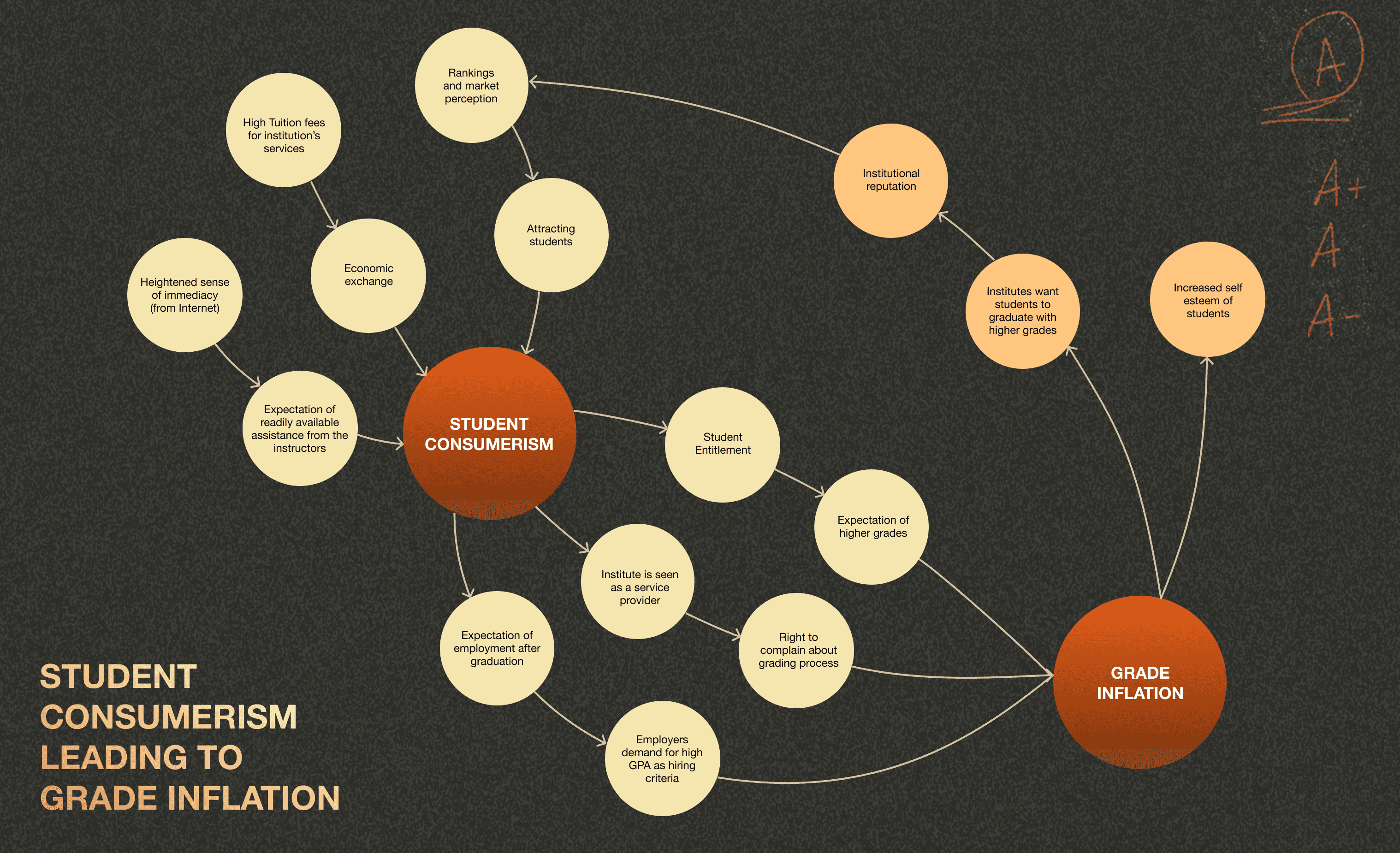
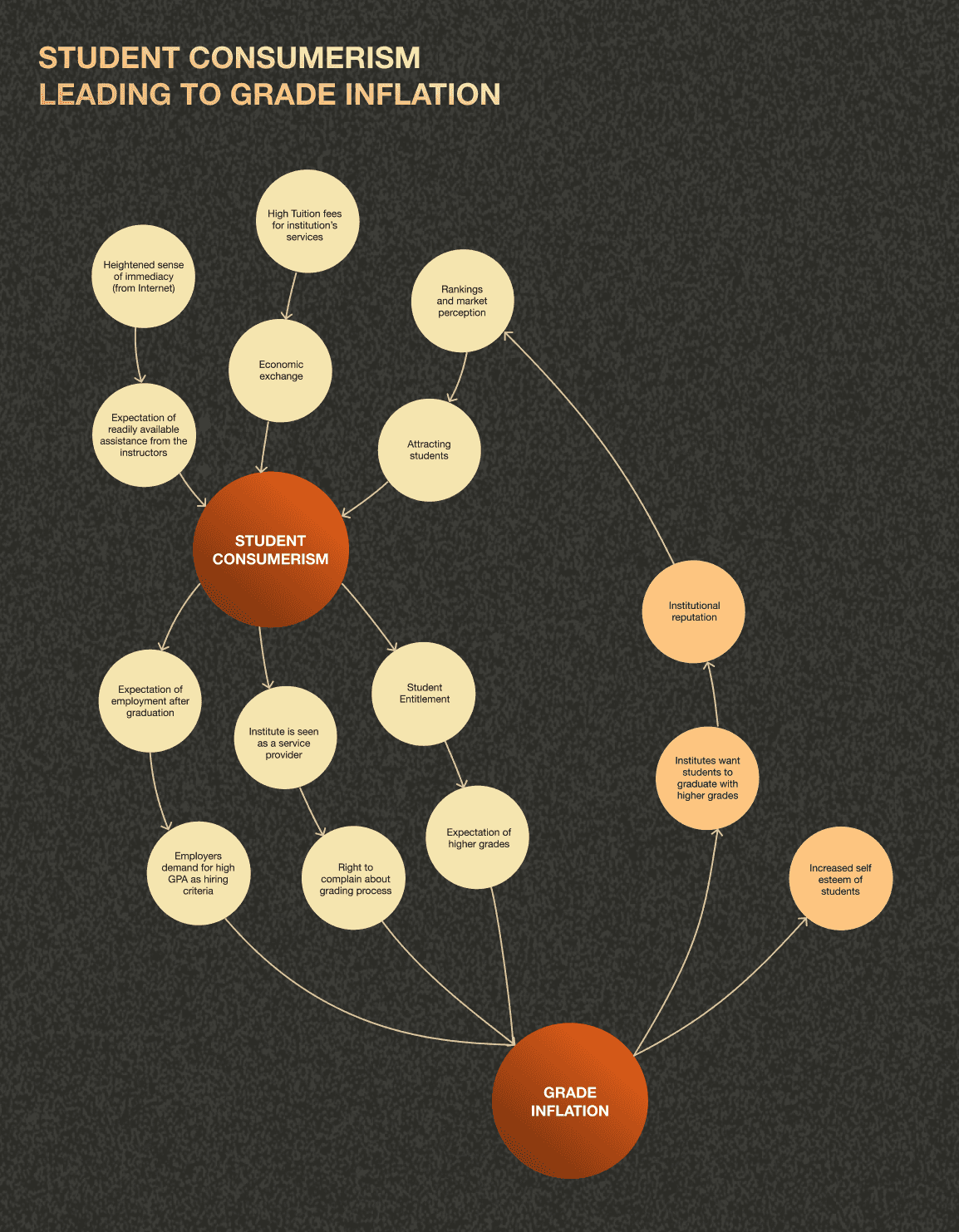
Here's the thing though: no single actor is causing grade inflation. The system is simply producing the behavior it is best designed to reward. And that's what makes this really interesting from a design lens.
Learning is inherently messy. Some of the most transformative educational experiences come from confusion, failure, revision, and delayed understanding. A letter grade compresses a complex developmental journey into a symbol that now carries financial, emotional, and reputational weight. Schools have already started alternate ways of evaluating students as a way to tackle the issue, but there’s still a long way to go.
The more education adopts the logic of a service system, the harder it becomes to preserve the value of rigor. No one sat down and decided this. It emerged. From tuition hikes and ranking pressures and parental expectations and enrollment anxieties all pulling in the same direction at the same time.
The system drifted, and grades drifted with it. It started working for different goals than the ones written in the syllabus.