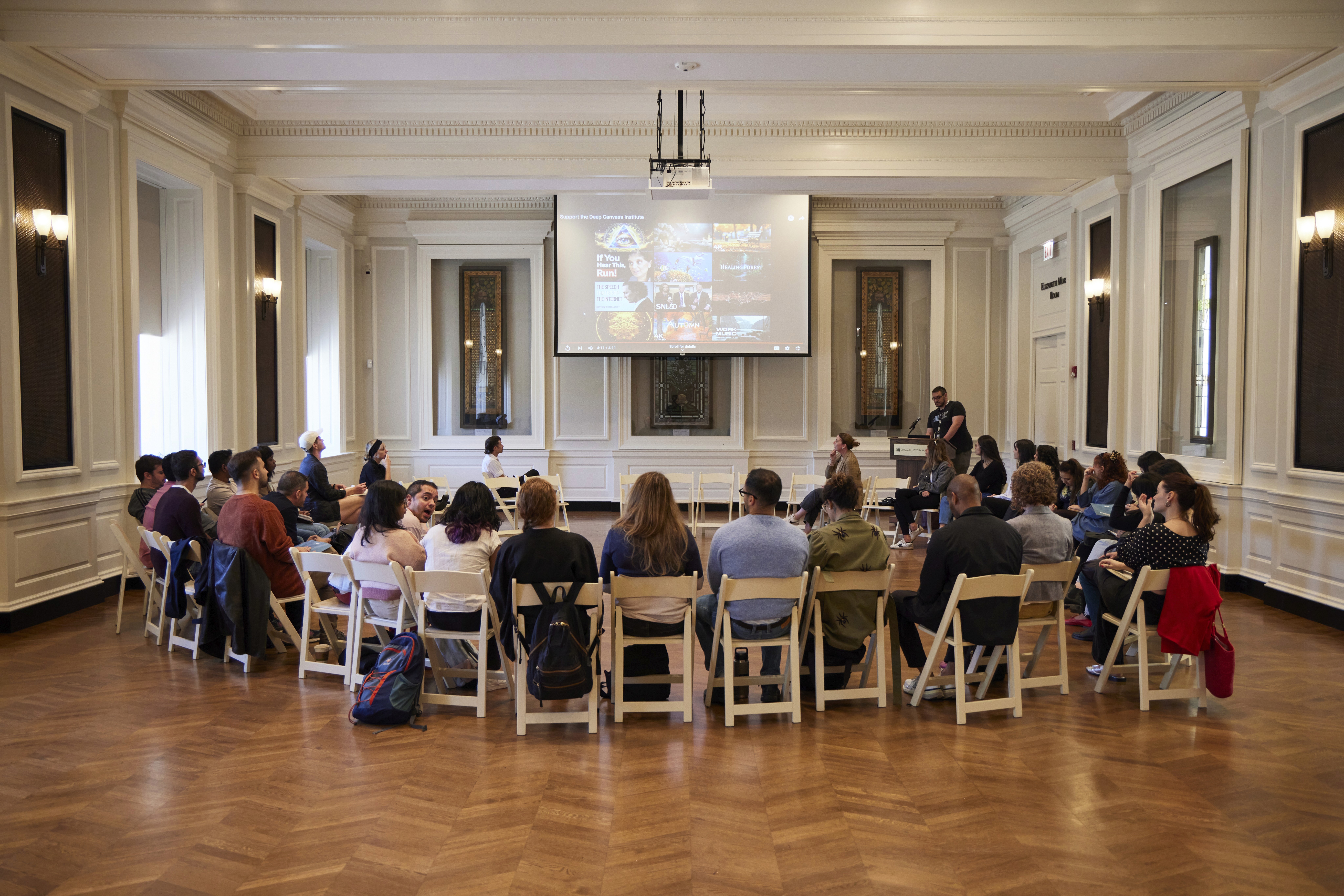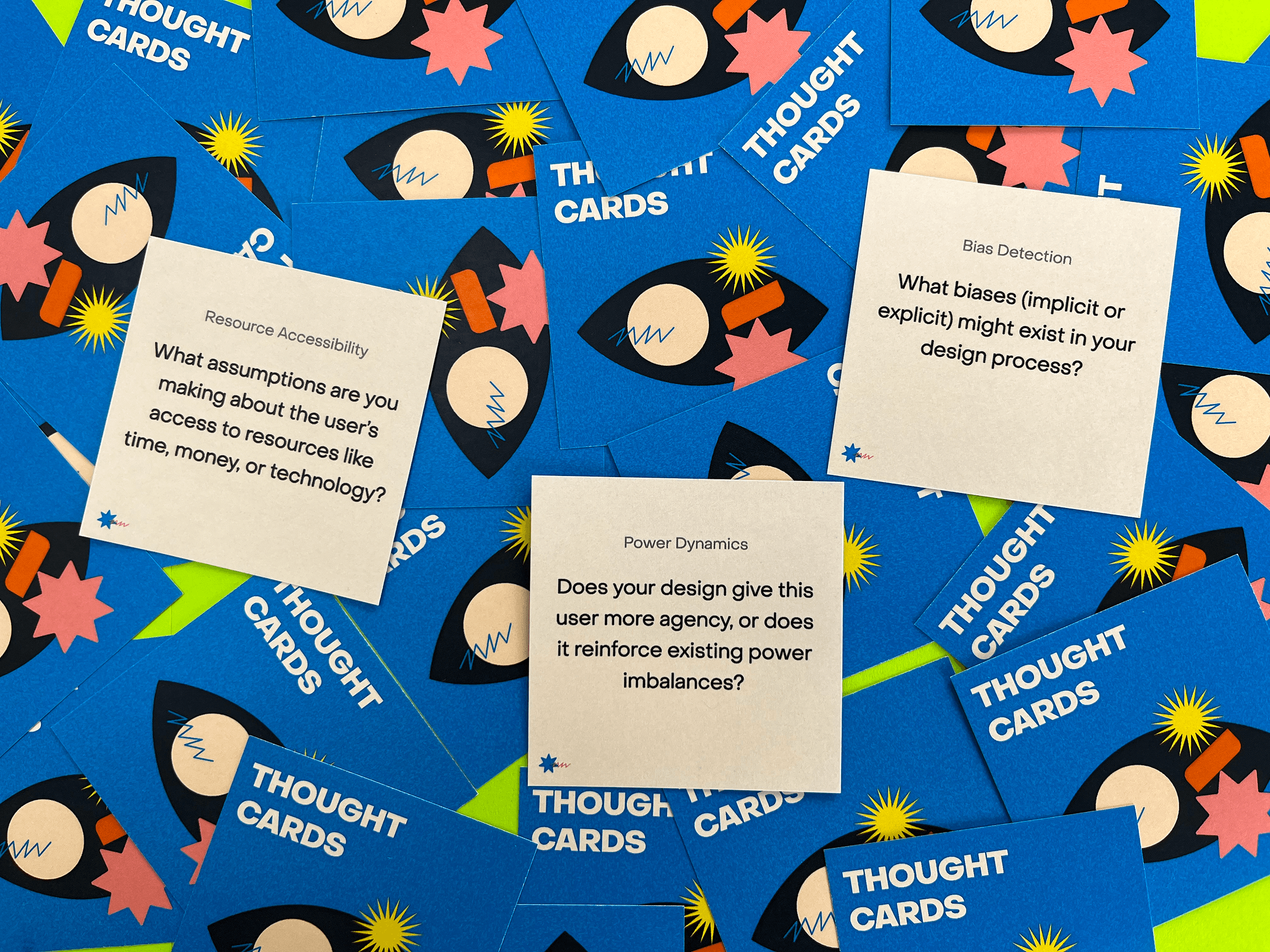
One of my classes in grad school led me to a question that I keep going back to: how human-centered is "human-centered design," really?
Because here's the thing: I am a specific human. I'm a brown woman. I grew up in India, in a particular class, a particular caste, with a particular kind of education. I carry privileges I don't always see and blind spots I'm still discovering. When I sit down to design something, all of that comes with me. It's never explicit, but it shapes what I notice, what I assume, and what I think needs fixing. It shapes who I imagine when I picture a "user." And most design practice doesn't have a good answer for that.
I'm glad we're doing away with "personas"
Slowly, but surely, we're dropping the concept of user personas, and that makes me happy. We use personas to stay grounded in who we're designing for, but a persona is a compression. It takes a human being with layered, intersecting identities and flattens them into a profile that's easy to work with. And "easy to work with" usually means stripped of the complexity that makes them human.
A senior woman who doesn't speak English and lives in a place with limited services isn't just "an older user." She's navigating three systems at once- age, language, and infrastructure, and they don't stack neatly. They interact. They compound. A persona that captures one of those things misses the point entirely.
I wanted to make something that forced the question earlier in the process, before the wireframes, before the "how might we," right at the moment when a team is still deciding who they're designing for.
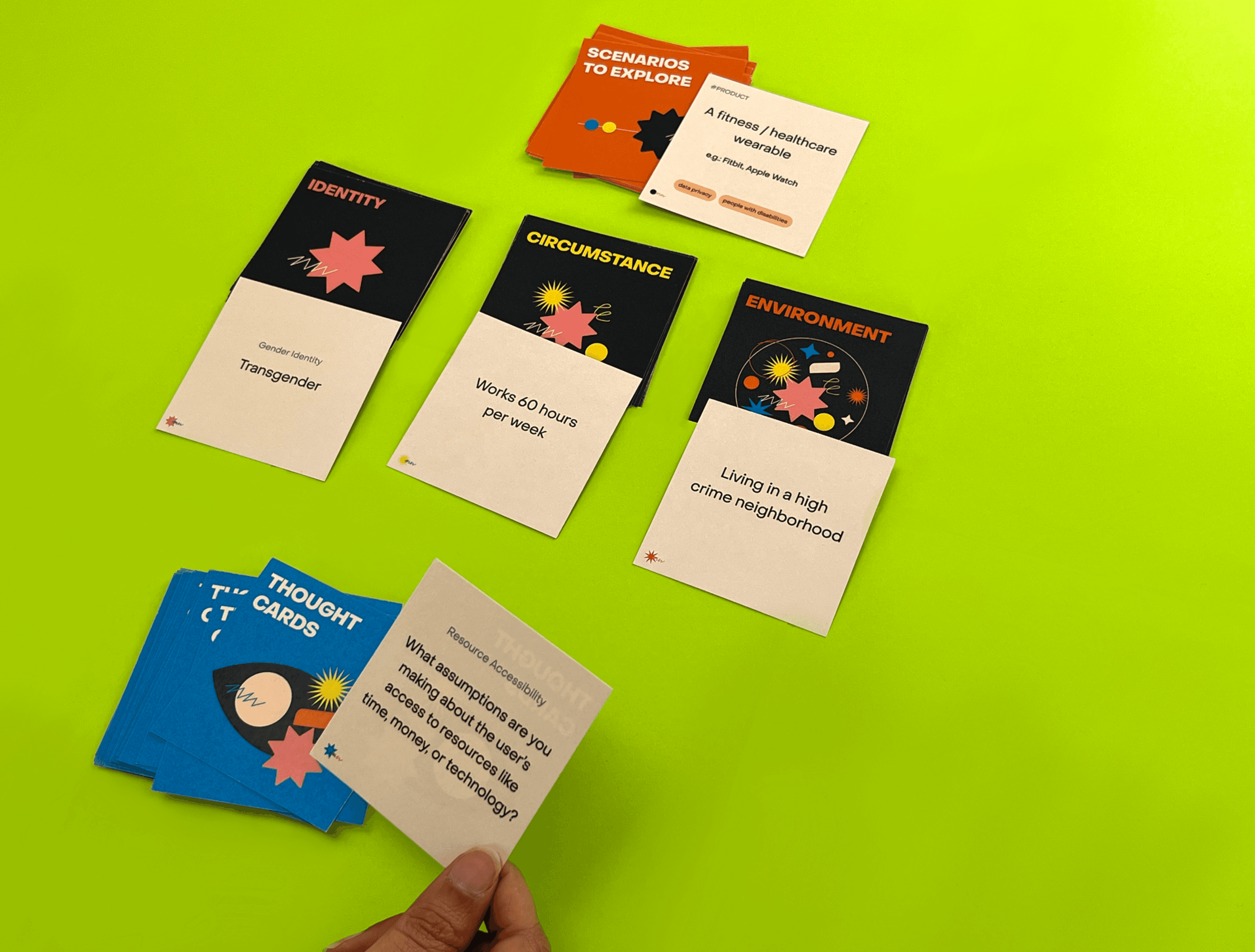
The tool I built, Threads of Identity, is a card-based activity for design and product teams. Participants draw cards across three dimensions: Identity, Circumstance, and Environment, to construct a user profile. A complex one that shows their realities. Someone whose identities interact with their life circumstances and the systems around them in ways that produce very specific experiences of access, power, and exclusion.
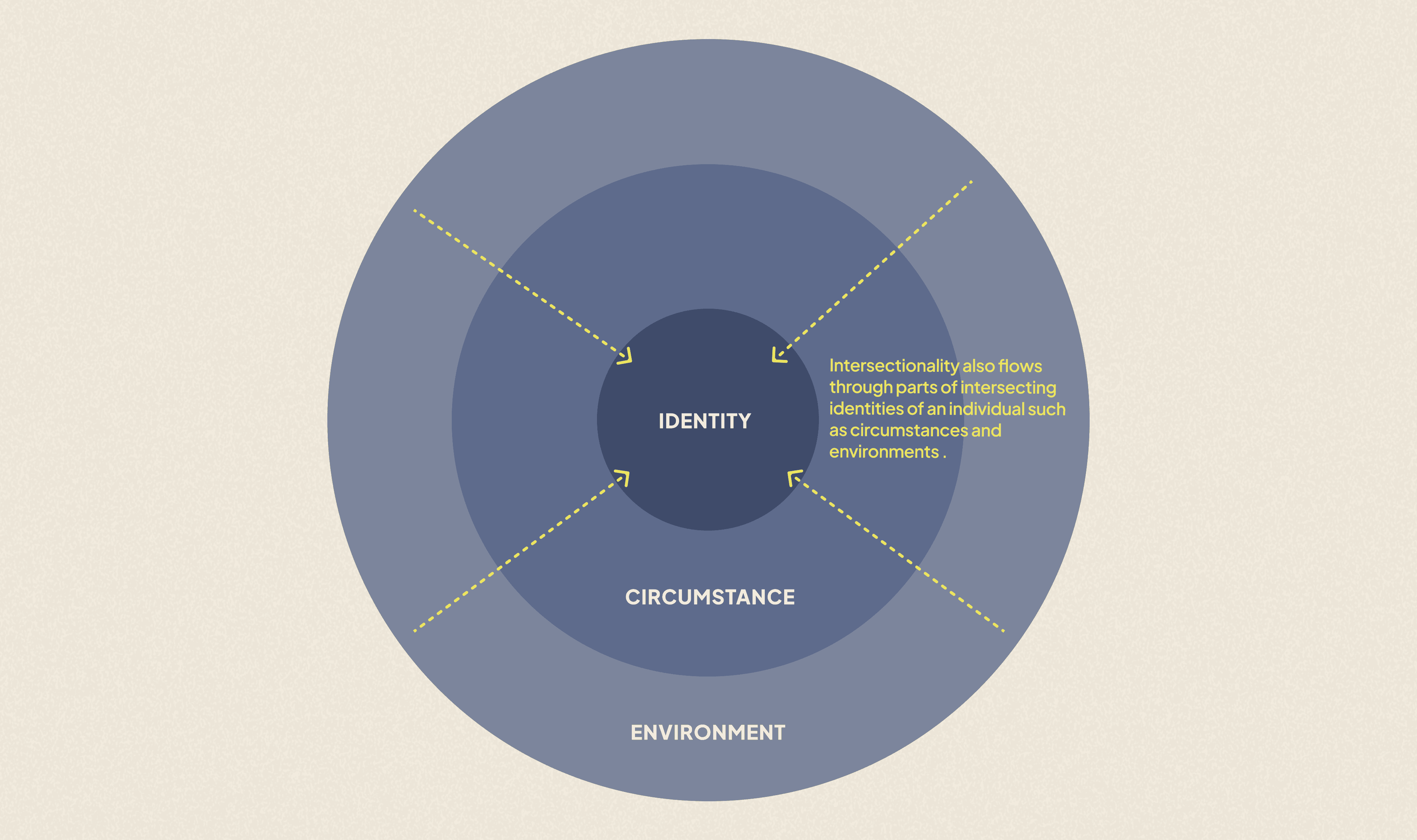
The three dimensions are distinct but inseparable. Identity is who you are — your race, gender, age, caste, ability, sexuality. Circumstance is what life hands you — whether you're a caregiver, a non-native speaker, someone navigating financial precarity or immigration status. Environment is the system you're inside — the infrastructure, the institutions, the political and cultural context that shapes what's available to you and what isn't. None of these exist in isolation. A person's identity shapes how they experience their circumstances. Their circumstances determine what environments they can access. And the environment either amplifies or suppresses both.
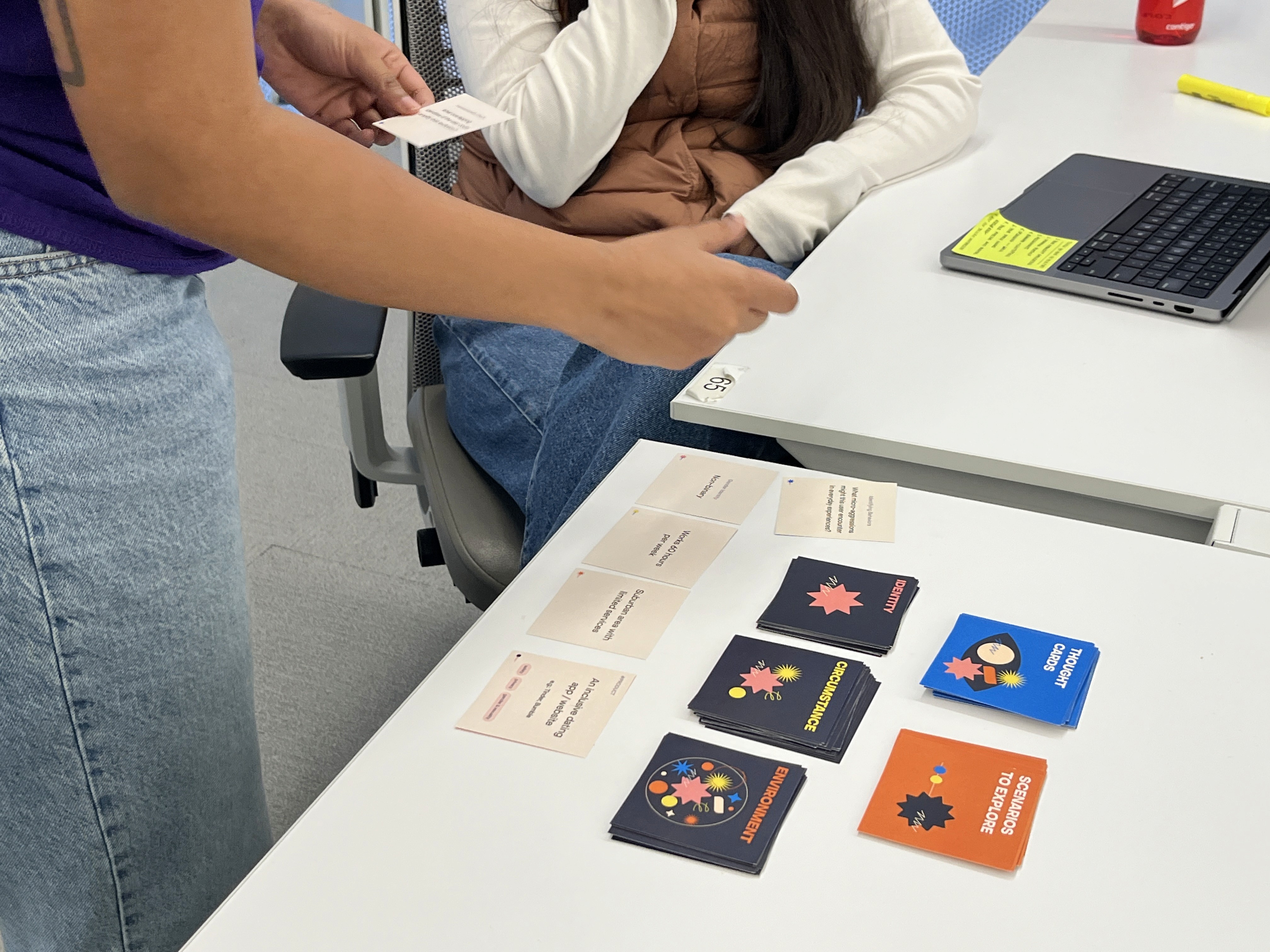
Then you sit with that profile and ask: Does our design actually work for this person in their life, with their constraints? The thought cards push the conversation further, prompting teams to surface tensions and challenge assumptions specific to their context. The format is intentionally flexible. Add cards, swap them, build new ones. If the conversations they surface are tough, that means this toolkit actually works.
Designers are not neutral. I am not neutral. The choices I make, such as what user frustrations seem to be the most important, or which edge cases I treat as edge cases, are political choices, whether I name them that way or not.
"Design is political" is a phrase that gets thrown around a lot, sometimes as a provocation, sometimes as a critique. What I mean by it here is simpler: every design decision encodes a set of assumptions about who matters and how the world works. The question isn't whether your identity influences your work. It does. The question is whether you're doing anything with that awareness.